
Practitioners and the Application of the Science
Testifying Without Scientific Authority The Discipline of the Practitioner-Expert Who Relies on the Research By Jamie Borden Critical Incident Review,
The Conversation
A Trainer in the Chief’s Chair
What I learned about leadership from Chief Jay Gerace and the Colonie Police Department
By Jamie Borden, Critical Incident Review
I have taught force analysis and force investigation to police agencies across the United States and in other countries, and I have sat with command staffs of every size and temperament. Somewhere along the way I stopped being surprised by what makes a department good, I think we know what a great department looks like in the utopian world of never ending budgets resources, zero attrition, no controversy, the support of city management; But even knowing what makes a great department – the task of creating and maintaining a strong culture and morale can be daunting for a Cheif. So I want to write about a chief I saw it in, because I think the profession needs the example more than it needs another lecture from me.
When Danny King and I sat down with Chief Jay Gerace of the Colonie Police Department in New York for one of our conversations, Danny introduced him as a man who had done some remarkable things in twenty seven years on the job. Jay laughed it off. He said he did not know how remarkable he was, and he spent the next several minutes talking about his cops instead of himself. That reflex, turning attention away from the chair and toward the people who fill the shifts, was the first thing I noticed about him when I met him, and it explains nearly everything that follows.
Jay describes himself in four words. He is a trainer at heart. He loves his cops, he believes in the mission, and he remembers a promise he made to himself long before he had any real influence over the agency: if he ever landed in the chief’s seat, he would do everything in his power to keep his men and women safe. Most leaders say something like that. Jay has built a department around it, and I have had the privilege of watching it work from the inside.
His path was an ordinary one, which is part of the point. He liked teaching, so he became a general topics instructor under the New York State system and picked up small classes at the academy whenever he could. He served on the SWAT team and later took over the sniper element because the unit had no one left to teach it. He ran crisis negotiations before de-escalation was a word, back when it was simply called learning how to talk to people. A couple of mentors let him attend outside training, and he made a habit of bringing whatever he learned back to the agency in small, usable pieces.
Most of his real training, by his own account, did not happen in a classroom. It happened on the road as a sergeant and later as a lieutenant, pulling officers aside after a call and talking it through. He learned to do a lot less talking and a lot more asking. What did you experience? What did you think? What would you tell yourself to do tomorrow? I recognized those questions immediately. They are the habit of a teacher, not an administrator, and they are the same questions that shape how his department reviews a use of force today.
Anyone who has taught in this profession knows the frustration Jay describes. An outside instructor comes to town and an agency sends two or three people. Those officers go home with new ideas and nowhere to put them. The information touches the department but never reaches it. Jay borrows Malcolm Gladwell’s language for the problem. There are never enough people in the room to create a tipping point for change.
He could not fix that as a sergeant or a lieutenant. He can fix it as chief, and he is candid that this is one of the few real advantages of the position. When his department vets an outside trainer and decides the material is worth having, Jay sends everybody. At a minimum that means every supervisor, sergeants and above, and beyond them the investigators and patrol officers the agency sees as its next generation of leaders. He is not chasing certificates for personnel files. He is building momentum behind an idea the department believes in.
That is how roughly sixty of Colonie’s 116 sworn officers, along with personnel from a number of neighboring agencies, came to sit in my Force Analysis class. But here is what I want people to understand, because it is the part almost no chief does. Jay did not send his people and wait for a report. He sat in the class himself. And when it was over, he went and found his sergeants and asked them what they had learned, where the department needed to go next, and what he should do about it. Then he did it.
I have taught this material to investigators, supervisors, and command staffs all over the country, and the critique forms say the same thing over and over: our command staff needs to be in this room. The usual pattern is an upward push. Officers and investigators learn the material at ground level and then spend their careers trying to move it up the chain, where it stalls against the management layer that most needs it.
Colonie flipped the script, and I have not seen many places that have. The information is being pushed down into the department from a place of authority. When a chief attends the training, adopts its language, and then stands in front of his own officers and his own community to explain what video can and cannot tell them, the concepts stop being something the troops believe and the bosses tolerate. They become the way the agency thinks.
One idea took hold with Jay more than any other. In the class we spend a great deal of time on the difference between educating and explaining on one side and advocating and excusing on the other. The line between them is thinner than it looks. An explanation delivered after the public has already reacted emotionally to a use of force video will be heard as an excuse, no matter how accurate it is. The same explanation delivered ahead of time, before there is an incident to defend, is simply education. Jay understood immediately that the timing was the whole game. Most people who hear that nod and move on. He went home and acted on it.
The everyday use of force review at Colonie begins with a sentence in policy that a lot of agencies would hesitate to write. Absent injury or something extraordinary, the department recognizes a use of force as a normal function of the job. That single acknowledgment reshapes everything downstream. Officers are trained to use force, they are expected to use it when it is warranted, and they have the right to use it in certain circumstances. Colonie says so out loud, and Jay and I talked about this at length outside the classroom. It is a foundation, not a loophole.
The review itself is a conversation before it is an inspection. A first line sergeant sits with the officer during arrest processing and asks the questions Jay has been asking for decades. Tell me what happened. What did you perceive? How did we end up where we ended up? Every supervisor in the department is familiar with the cognitive interview. The officer reinstates his or her own context and drafts the report before watching any video, and then views the footage only to note discrepancies, not to reconcile the report to the camera. The sergeant reviews the body camera, sometimes with the officer beside them. The lieutenant reviews the sergeant’s work. None of it is adversarial. The working assumption is that officers are following their training, and Jay will tell you that ninety nine percent of the time they are. Cases involving injury or hospitalization follow their own policy path up to the deputy chief of operations.
Jay is clear about why the order matters. A body camera is not an eye tracker. It may be pointed straight ahead while the officer’s head is turned. A jacket or a hand may block the lens at the moment that counts. The camera may capture what the officer never saw and miss what the officer saw plainly. Inconsistencies between a report and a video are the norm, and the thing I most wanted his officers to take from the class is that this is okay, it is expected, and here is why. What struck me is that Jay had already built the process. All the class did was give him the words.
Colonie has a wellness program and a wellness team, and Jay is proud of both. He is also unsentimental about their limits. All of it, he told us, is secondary to how an officer is treated by a first line supervisor on an ordinary Tuesday. The best wellness program in any police department is whether the officer believes his or her conduct will be evaluated fairly, not only on the big use of force but on the small everyday decisions. Programs that address problems after the fact cannot substitute for that. I have said versions of this in classrooms for years. I do not think I have ever heard a chief say it more plainly.
I have had the luxury of interacting with his officers, and I can tell you that morale in that department is strong. It is strong because the officers know where the training comes from and why. There may be administrative frustrations in and around any agency, but the officers in Colonie are not making decisions in the field while thinking about how they will be scrutinized. They are thinking about the problem in front of them, because they trust that a good faith decision will get a fair and balanced review. That is the entire difference, and it comes directly from the chief.
Jay also talked about a mindset his people share, that there is always more to learn and that it is fine not to be the expert. He told me during the class, “Man, I feel like I don’t know anything here.” He meant it as a compliment to the material, but I heard something better in it. A chief who can say that out loud has given his officers permission to say it too, and officers who are not defending a claim to expertise are free to keep getting better. His observation is that this mindset alone produces better performance. Mine is that it takes a secure leader to create it.
Danny put the concept in the language of psychological safety, the belief that an officer who tries to do the right thing for the right reasons will be treated fairly regardless of how the outcome looks. Danny and I built a culture like that once, in the use of force training and analysis unit we ran together, and we watched it take five years to reach the point where the numbers showed officers making confident, sound decisions. We also watched it dissolve in sixty days when the unit was dismantled and a leader of a different kind arrived. Cultures like this are effortful, thoughtful, and slow. They can collapse on the strength of one risk averse decision made to protect a position rather than a department. Jay has built the slow kind, and he protects it the way only someone who understands its fragility can.
None of this makes Colonie soft on force, and I want to be precise about that because it matters. The department’s shorthand for its expectations is three words: firm, fair, and fast. Force is an inherent component of police work, Jay says, and it is not going away. When it is warranted, delay does not make it gentler. He can point, as anyone in the profession can, to hundreds of videos where officers waited on force that would have been appropriate much sooner, and where a two officer takedown that should have ended with a handcuffed suspect and everyone unharmed instead became a catastrophe.
This lines up with a concern I raise in every class. When de-escalation is trained as a mandatory first response, something officers must attempt before any level of force, it produces goal conflict. Time passes, opportunities are missed, and the fast fair response becomes an escalated one. The Graham standard sets a constitutional floor. Policy that quietly raises that floor and then treats every departure as a Fourth Amendment violation does a disservice to officers and to the public. Colonie does not train it that way. When I spent time with his department I never got the sense that anyone misunderstood where de-escalation fits, and I attribute that to the way they train. Nothing is taught in a silo. De-escalation sits inside force training, communication training, and scenario work, because that is how the decisions arrive on the street.
At Jay’s invitation I conducted a formal analysis of Colonie’s use of force policy. He describes the result, with characteristic self deprecation, as a stack of things he does wrong. His policy is twelve pages. My analysis was closer to forty. What he did with it is the instructive part, and it is the reason I wanted to write this.
The first finding was one I make in most policies I am asked to review. Colonie’s policy was written as though objective reasonableness were a decision making model officers could apply in the moment. It is not. It is a hindsight analytical tool, the standard by which conduct is evaluated after the fact. In the field, officers act on their training, their experience, their understanding of policy, and what they perceive and believe at the time. The officer is the evidence. A department that expects officers to make objectively reasonable decisions in real time is expecting a crystal ball, and it is setting up a finding of objectively unreasonable force any time the video and the outcome look bad.
Jay took that to his command staff. The fix was a single paragraph stating plainly that the department does not expect an officer to use objectively reasonable force in the moment, that objective reasonableness is how conduct will be evaluated afterward, and that officers are expected to act on their training, experience, and perceptions. Everyone agreed it added clarity. The department adopted it within a couple of weeks of the class. Jay is honest that more work remains. But I have watched policy recommendations sit in binders for years. This one crossed the threshold in fourteen days.
The second finding was newer to him, and he said so, which I appreciated. Policy is permitted to be more restrictive than the Constitution, and most policies are. What matters is that the areas where policy exceeds the constitutional floor be identified explicitly and trained explicitly, so that a policy expectation is never mistaken for a legal one. The law will forgive more than a good policy will, and that is fine, as long as everyone knows which is which. Jay and his staff sat down as a group and asked where Colonie actually raises the bar. They found three places: shooting at moving vehicles, acute behavioral emergencies involving agitated subjects, and non-criminal barricades where the only person in danger is the person inside. In each area the department has trained its people for years to use time, distance, and cover, and to expect more of themselves than the law demands. What it had never done was say so in those words.
That is what his October in-service will do. Jay is delivering the chief’s portion himself, walking officers through the policy change and then naming the three areas where the agency affirmatively expects more than the law requires, in plain language, from the top. He jokes that he did not want to spend October teaching, that he had deer hunting plans and that his training unit overruled him with the words “Jamie said you have to do it.” I will take the blame. He is doing it anyway, which tells its own story.
The training that follows, which the department calls “Bang, Now What?”, is a full day rather than a slide deck. Officers pull cards and run short scenarios, none of which turn out to be deadly force encounters even though the title primes them for one. Every scenario ends in a use of force, and every officer then writes the report, workshops it with facilitators and peers, watches the video, and walks through the department’s officer involved shooting protocol so that no one learns what the attorney general’s investigation looks like on the worst day of their career. Colonie has run this before. When the training unit pointed out that roughly thirty new patrol officers had joined since the last time, Jay’s response was immediate. Run it again. As I told him, it is a renewable crop. That is the pressure of being a farmer.
The clearest demonstration of what Jay took from our time together did not happen inside the department at all. When he met with his sergeants after the class, the message he heard most often was simple. Chief, you have to tell everybody about the videos and the distortions. He heard something larger in it. He is a chief and a trainer at heart, and he told us he cannot advocate or excuse. At some point he has to call balls and strikes. But it is not fair to call balls and strikes if nobody understands the rules of the game first, and that includes the public.
Within a week of the class, his training unit had recreated several of the video distortion demonstrations from the course and from the camera versus human eye resource we published a couple of years ago, using the department’s own body cameras. Jay had been using that resource internally with his own bosses for two years, which I did not know until he told us. Now he turned it outward as a four week public video literacy campaign on the department’s social media.
The structure is deliberately simple. On Tuesday the department posts a still image and a question. On Wednesday it posts the answer. On Thursday the chief posts his own message about what the community just saw. Week one asked the public to estimate distance from a body camera frame. Guesses ranged from six feet to fifty. The post drew roughly 44,000 views for a department of 116 officers with a Facebook following of about 27,000, and when the department overlaid the frame with a fifty millimeter reference image, the response was curiosity rather than hostility. Jay expected some hate. He got almost none. Week two asked what the officer was focused on during a traffic stop, and the public answered with the driver’s eyes, hands, and license, never considering that the officer’s head had turned entirely toward a second threat while the camera stayed fixed on the car. Week three covers lighting, with images the unit captured in the dark. Week four recreates the demonstration that captivated his entire staff in class, an officer who appears on body camera to be firing across his partner because of the fisheye lens, paired with an overhead image showing him aimed squarely at the suspect.
When the campaign is finished it will live on the department’s website next to the use of force policy, and Jay intends to share it through the state chiefs association. His ambition is modest in tone and large in scope. If enough departments do this, the profession can begin to turn the tide on what a video is understood to mean before the next controversial clip arrives.
I cannot overstate what this represents. Educating the public about perception, memory, and camera limitations after a shooting reads as advocacy no matter who delivers it. Educating them on a quiet Tuesday, with a still image and a question, is something else entirely. It is the principle I teach carried to a conclusion I had not managed to carry it to myself, and it took a chief to do it.
Danny asked Jay what he would say to the leaders of agencies where every use of force is treated as a crisis and officers hesitate to do what the situation requires. His answer was that he probably would not say anything. It is very hard to reach someone who does not want to be reached. What he does instead is let the work speak. He leverages his position toward the positive, publishes what Colonie is doing, and lets other agencies come to him. They do. He gets calls and emails constantly asking how the department did something and whether they can borrow it, and his answer is always the same. There is nothing proprietary. If it makes the men and women of another department safer, take it, because the community is safer too.
He has published ten or eleven articles in outlets like Police1 and Police Chief Magazine to share the department’s wins. He speaks to chiefs’ groups regularly and describes it as an invitation rather than a sermon, adding that he usually learns more from the audience than they learn from him. He keeps what he calls a progressive training bubble around him, bosses who remember where they came from, and he is generous about the chiefs he works with. They are good people trying to run good departments, he says. What they lack is not character. It is an understanding of what video can and cannot show, and he has made it his personal project to close that gap one simple conversation at a time. Distance distortion. The eye tracker. Lighting. The fisheye lens.
Our relationship has run in both directions. Colonie adopted our post shooting checklist a year or two ago and modified it to fit the agency, and Jay shared his version back. He found us in the first place the way many chiefs do, by reading material we publish for free, and he made a point on the record of telling Danny and me that the content matters and that it changed his agency. I mention that not to promote what we do but because it says something about him. A lot of chiefs use outside resources. Very few go out of their way to say so.
Teaching across the country and overseas has given me a vantage point few people in the profession get. I have watched the same kind of leader reappear in the critique forms and the hallway conversations, in agencies with strong cultures and agencies in the middle of losing them, and the pattern is not complicated. It is the single most reliable mark of a true leader I have encountered. The great chiefs inherently care about their people and the community they serve more than they care about the position they hold.
It is not personality or charisma, and it has little to do with how a chief presents at a press conference. It shows up in smaller places. It is the chief who is in the room for the training rather than reading a summary of it. It is the chief who asks a sergeant what the department should do next and then does it. It is the chief who treats a risk averse decision that would protect his own tenure as the failure it is, because he understands what that decision costs the officer on the street and the culture that officer works inside. Chiefs who lead this way are not rare because the profession lacks good people. They are rare because the position itself exerts a constant pull in the other direction, toward the mayor, the city manager, the headline, and the safe answer, and it takes a particular kind of person to resist that pull every day for years.
I did not have to look hard to find it in Colonie. I saw it in the way Jay talked about his officers before he talked about anything else, in sergeants who spoke about their chief without the guardedness that usually accompanies that subject, and in the speed with which the department moved from a class to a policy to a public campaign, none of which made the chief’s job easier and all of which made his officers safer and his community better informed. That is the test, and it is the same test in a hundred officer department in upstate New York as it is in a major metropolitan agency or a national police service overseas. Does the chief serve the badge, or does the badge serve the chief?
I draw a distinction in my classes between a change agent and a change maker. A change agent arrives with an agenda and fixes things that are not necessarily broken. A change maker builds something people can stand on. Departments know the difference, and so do the officers who work in them. Danny and I have watched a five year culture of fairness and confidence dissolve in sixty days under a leader of the first kind. In Colonie we found the second.
What makes Jay Gerace worth writing about is not that he attended a class, or revised a policy, or ran a social media campaign, although he did all three and did them quickly. It is that every one of those decisions points the same direction, away from the protection of his own position and toward the people who carry the badge for him and the community that pays for it. He sends everybody to training because he remembers being one of the three who went alone. He asks his sergeants what the department should do next because he remembers being a sergeant. He explains video to the public before an incident because he refuses to be a chief who calls balls and strikes without explaining the rules. He is spending his October in a classroom instead of a deer stand because his training unit told him he had to, and because he agrees with them.
Jay thanked Danny and me at the end of our conversation for the training and for the resources, and he told us the content matters. I want to return the favor here, in public, because he treated me like part of his family and because the friendship we have built since is one of the better things to come out of my work. But the thanks belong to him. Twenty seven years in, he still describes himself the same way he did at the start. He is a trainer at heart. His department, and the community it serves, are the proof, and every chief who reads this should ask whether their own people would say the same about them.
 Critical Incident Review: The Saturation Model: An Organizational Leadership Framework for Training-Centric Culture
Authored by Sgt. Jamie Borden (Ret.),
Resources; Article and Interview with Chief Gerace, Colonie, NY
The Saturation Model: An Organizational Leadership Framework for Training-Centric Culture
1. The Trainer-at-Heart: Redefining the Chief’s Primary Mandate
The “Trainer-at-Heart” philosophy represents a strategic shift from the Chief as a political administrator to the Chief as the ultimate protector of the field officer. At Critical Incident Review (CIR), we recognize that the most profound way to shield personnel from legal, physical, and career-ending liability is through a relentless commitment to education. This mindset acknowledges the “Perimeter of Ignorance”—the understanding that as we learn, we discover how much more there is to master. For a leader, this means grounding the agency’s mission in the promise that officers will be equipped with the tools to survive the street and the subsequent scrutiny.
The Archetype of the Change Maker The career of Chief Jay Gerace (Colonie PD) provides the template for this transition. Moving from a tactical sniper lead to a crisis negotiator represents more than a change in assignment; it is a shift from a purely force-oriented mindset to one grounded in human performance and communication. This evolution defines the “Change Maker,” a leader who builds institutional infrastructure, rather than the “Change Agent,” who prioritizes political optics.
The Power of Asking Strategic leadership requires moving from “inspection” to “teaching.” Chief Gerace’s model utilizes three core questions during post-call reviews to facilitate self-correction and growth:
This individual mindset is the catalyst; however, it must be scaled into a department-wide structural strategy to achieve a permanent cultural shift.
2. The Saturation Strategy: Achieving the Cultural Tipping Point
Saturation is the tactical antidote to the “Certificate-Chasing” culture, where agencies send two or three officers to a course merely to check a box. True organizational change requires reaching a “tipping point”—a threshold where enough members of the agency share a common language and understanding that the culture itself evolves. Without saturation, information merely “touches” the department; with it, information “reaches” the department and becomes the standard.
Comparison: Information Touching vs. Information Reaching
Feature | Traditional Sending Model (Touching) | The Saturation Model (Reaching) |
Attendance | 2–3 officers per agency. | 60%+ of the department, including all supervisors. |
Internal Momentum | Information stalls; officers have no peer support for new ideas. | High; creates a common language and shared operational expectations. |
Cultural Impact | Fleeting; ideas are tolerated but rarely integrated. | Permanent; the new information becomes “how the agency thinks.” |
Leadership Role | Command staff waits for a summary report. | Chief personally sits in the training room for the duration. |
The Leadership Presence Mandate Saturation requires the “Leadership Presence Mandate.” In the traditional model, information is an “upward push”—officers learn at the ground level and struggle to push concepts up through a resistant management blockade. In the Saturation Model, the Chief’s presence in the room validates the material. This creates a “downward push” from authority, signaling to the rank-and-file that the training isn’t just a suggestion; it is the operational reality of the organization.
The ultimate goal of this saturation is to move beyond tactical proficiency and establish the foundation of psychological safety.
3. Establishing Psychological Safety: The First-Line Wellness Engine
In a law enforcement context, Psychological Safety is the belief that if an officer attempts to do the right thing for the right reasons, they will be treated fairly by the organization, immaterial of the outcome. This is the bedrock of operational morale. When officers feel safe, they make confident, sound decisions; when they feel unsafe, they become risk-averse, hesitating in critical moments to protect their careers rather than the community.
Wellness as Daily Interaction CIR asserts that true wellness is not a post-incident program; it is “how you are treated by your sergeant on an ordinary Tuesday.” The first-line supervisor is the primary engine of organizational wellness. If an officer trusts their sergeant to evaluate their conduct fairly, the department remains healthy.
Contrast of Cultural Environments Psychologically Safe Department | Psychologically Unsafe Department :— | :— Officers are free to chase the “Perimeter of Ignorance,” acknowledging they aren’t experts and seeking growth. | Officers defend a false claim of expertise to avoid being targeted for “mistakes.” The focus is on investigation, review, and analysis of good-faith decisions. | The focus is on scrutiny and risk-aversion to satisfy municipal or political pressure. High confidence leads to “Firm, Fair, and Fast” application of necessary force. | Hesitation and goal conflict lead to escalated force and catastrophic outcomes.
The Resilience of Culture The fragility of culture is best illustrated by the case of the “Use of Force Training and Analysis Unit” (founded by CIR’s Jamie Borden and Danny King). It took five years of data-driven, fair treatment to build a culture of high confidence and morale. However, when a “Change Agent” leader arrived, that same culture was dissolved in 60 days. The “So What?” for administrators is clear: cultural gains are hard-won but easily sacrificed on the altar of political convenience.
4. Functional Policy Architecture: Bridging Hindsight and the Field
There is a dangerous conflict in modern policing: the misuse of “Objective Reasonableness” as a real-time decision-making model. Objective reasonableness is a hindsight tool used by courts to evaluate conduct after the fact. Expecting an officer to be “objectively reasonable” in a split-second encounter is expecting them to have a crystal ball.
The Policy Realignment Framework Functional policy must acknowledge that the officer is “the evidence.” Their perceptions, beliefs, and training are what drive their actions. Chief Gerace moved his agency from training to a revised policy in just 14 days, specifically to address this reality.
The Specific Paragraph Revision:
“The department does not expect an officer to use objectively reasonable force in the moment. Objective reasonableness is how conduct will be evaluated afterward. Officers are expected to act on their training, experience, and perceptions.”
Defining the Constitutional Floor While the Fourth Amendment (Graham v. Connor) sets the “Constitutional Floor,” a department may affirmatively choose to raise the bar. The Saturation Model explicitly identifies these areas so that policy expectations are never confused with legal requirements. Colonie PD expects more than the law requires in three specific areas:
The “So What?” Layer: By explicitly naming these areas, the leader protects the officer. It ensures that an administrative policy violation is recognized as such, preventing it from being wrongly conflated with a Fourth Amendment violation (legal liability).
The “Bang, Now What?” Training Model Post-incident protocols must pull back the curtain on the investigative process. This includes:
5. Proactive Public Literacy: Calling “Balls and Strikes” Preemptively
A core CIR principle is that the timing of education dictates its perception. Education delivered before an incident is “Information”; education delivered after an incident is perceived as “Advocacy” or an “Excuse.” Because of “Emotional Conductivity,” the public reacts viscerally to force videos; the Chief must provide the rules of the game before calling balls and strikes.
The Four-Week Social Media Campaign Colonie PD implemented a campaign to teach the public about the inherent limitations of Body-Worn Cameras (BWC):
The Strategic Outcome: This proactive literacy shifted the public narrative from hostility to curiosity, earning over 44,000 views. This is not a PR stunt; it is a core leadership function that establishes a realistic understanding of evidence before the next crisis occurs.
6. Conclusion: The Leadership Checklist for Cultural Transformation
The Chief’s role is ultimately that of a “Farmer” tending to a “Renewable Crop” of personnel. Each year, new officers join, and the culture must be replanted, nourished, and protected from the elements of political pressure and risk-aversion. This framework provides the tools to ensure your agency is slow to change and resilient in its excellence.
The Implementation Checklist
Final Statement: The standard for excellence is a culture that is “Firm, Fair, and Fast.” By building a foundation of education and trust, leaders ensure their department remains a safe place for officers to do the right thing for the right reasons.
Critical Incident Review: Visual Literacy Primer: Bridging the Gap Between Body-Worn Cameras and Human Perception
Authored by Sgt. Jamie Borden (Ret.)
1. The Myth of the “Objective” Lens
In the current landscape of forensic review, the Body-Worn Camera (BWC) is frequently mischaracterized as an “unbiased witness.” This is a foundational error. As a forensic video specialist, I view the camera not as a witness, but as a limited data collection tool. Relying on video as the absolute truth traps an investigator within a Perimeter of Ignorance. In the philosophy of Chief James Gerace, “chasing” this perimeter is a positive, lifelong pursuit for the aspiring learner; it is the realization that the more we learn about the complexities of human performance, the more we realize what the camera cannot tell us.
To bridge this gap, departments must shift from a reactive posture to a proactive educational one.
“The difference between educate and explain and excuse and advocate is not as bold as you would think. An explanation delivered after the public has already reacted emotionally… will be heard as an excuse. The same explanation delivered ahead of time… is simply education.” — Chief James Gerace
By providing the public and the courts with visual literacy before a crisis occurs, we move past the illusion of camera objectivity and toward a standard of transparency that respects biological reality. This education begins with understanding the specific mechanical distortions that distinguish a digital sensor from the human eye.
2. Distortion I: The Distance Illusion (Fisheye Lens Effect)
The most pervasive distortion in BWC footage is depth perception. Most BWCs utilize wide-angle lenses to maximize the field of view. While this provides context, it creates a significant “fisheye” effect. In forensic analysis, we often utilize a 50mm report—referring to a 50mm focal length, which is the standard that most closely approximates the magnification and spatial relationship of the human eye. Without this reference, a reviewer will almost certainly misjudge the immediacy of a threat.
Camera Perspective (Wide-Angle) | Human Perception (Approx. 50mm) |
Receded Subjects: Subjects and weapons appear significantly further away than they are in 3D space. | Immediate Proximity: Subjects appear closer and more immediate, providing a realistic sense of threat. |
Spatial Compression: A subject at 10 feet may appear to be 20 feet away on screen. | Spatial Accuracy: Magnification levels reflect the actual distance an officer must cover or defend. |
Because the camera consistently gets the distance wrong, it inherently fails to capture the officer’s focus of attention, leading to the second major distortion.
3. Distortion II: The ‘Eye-Tracker’ Problem
A common investigative failure is the assumption that “if the camera saw it, the officer saw it.” This is the Eye-Tracker Problem. Mechanically, a BWC is a fixed device attached to a torso; the human eye is a dynamic biological system driven by the brain.
As a specialist, I identify three critical reasons why a camera’s field of view (FOV) never equals an officer’s focus of attention:
Because the camera is not an eye-tracker, we must distinguish the mechanical record from the biological focus. This distinction becomes even more pronounced when we factor in the environment.
4. Distortion III: Lighting, Contrast, and Biological Reality
Digital sensors and the human eye process light through entirely different mechanisms. Digital cameras often utilize software to “boost” light in dark environments (gain) or “clamp” bright spots. This creates a “Lighting Challenge” where a camera may see clearly into a dark shadow where a human eye perceives only total darkness.
The “So What?”: The camera records light data, but it is incapable of recording the officer’s subjective belief. Under the legal standard of Graham v. Connor, the officer’s perceptions and beliefs in the moment are the evidence. The camera does not record biological reality; therefore, the officer is the primary evidence, and the video is merely a secondary, and often flawed, data point.
Because the camera cannot record the “subjective belief” required for a legal use-of-force analysis, the officer’s testimony must remain the central focus of the investigation. This leads us to the final mechanical illusion: the distortion of physical orientation.
5. Distortion IV: The “Crossfire” Illusion
The fisheye lens curves physical reality, bowing straight lines as they move toward the edge of the frame. This can lead to what Chief Gerace’s staff described as a “mesmerizing” and “captivating” optical illusion: the Crossfire Illusion. In one specific case analyzed by Jamie Borden, lens distortion made it appear that an officer was aiming their firearm directly at their partner. Only through forensic triangulation was the truth revealed.
When BWC footage shows a “point of aim” that contradicts an officer’s statement, investigators must follow these steps:
These mechanical distortions prove that we need a more sophisticated framework for reviewing force—one that prioritizes psychological safety over video perfection.
6. Application: The “Firm, Fair, and Fast” Framework
To protect the Psychological Safety of a department, leaders must adopt the “Firm, Fair, and Fast” approach. Psychological safety is the belief that an officer who makes a good-faith decision based on their perceptions will be treated fairly, regardless of how the video looks.
“Fast” is a critical component: force must often be delivered quickly to prevent “catastrophic outcomes.” Delaying a two-on-one takedown because of a fear of how it looks on camera often leads to an escalated shooting later. Objective Reasonableness is a hindsight analytical tool for judges and juries; it is not a real-time decision-making model for officers.
The New Standard of Review
Hindsight Analysis (The Camera) | In-the-Moment Perception (The Human) |
Standard: Objective Data (The “Crystal Ball”). | Standard: Subjective Beliefs and Perceptions. |
Method: Slow-motion, multiple replays. | Method: Real-time processing under stress. |
Focus: Everything within the 140-degree lens. | Focus: Narrow 1-3 degree focus of attention. |
Role: A tool for legal accountability. | Role: The actual evidence of the incident. |
Visual literacy ensures that we do not trade an officer’s safety for the appearance of perfection.
7. Conclusion: Chasing the Perimeter of Ignorance
For the aspiring learner, the goal is to remain a Change Maker—someone who builds a foundation of literacy that the department and community can stand on—rather than a “Change Agent” who simply reacts to agendas. We must accept that inconsistencies between a video and an officer’s report are the norm, not evidence of deception.
When we understand the rules of the game, we can call “balls and strikes” with integrity. Visual literacy allows us to evaluate an officer’s performance based on the human experience of the incident, rather than a mechanical distortion of it.
Key Takeaways for the Use-of-Force Report:
Testifying Without Scientific Authority The Discipline of the Practitioner-Expert Who Relies on the Research By Jamie Borden Critical Incident Review,
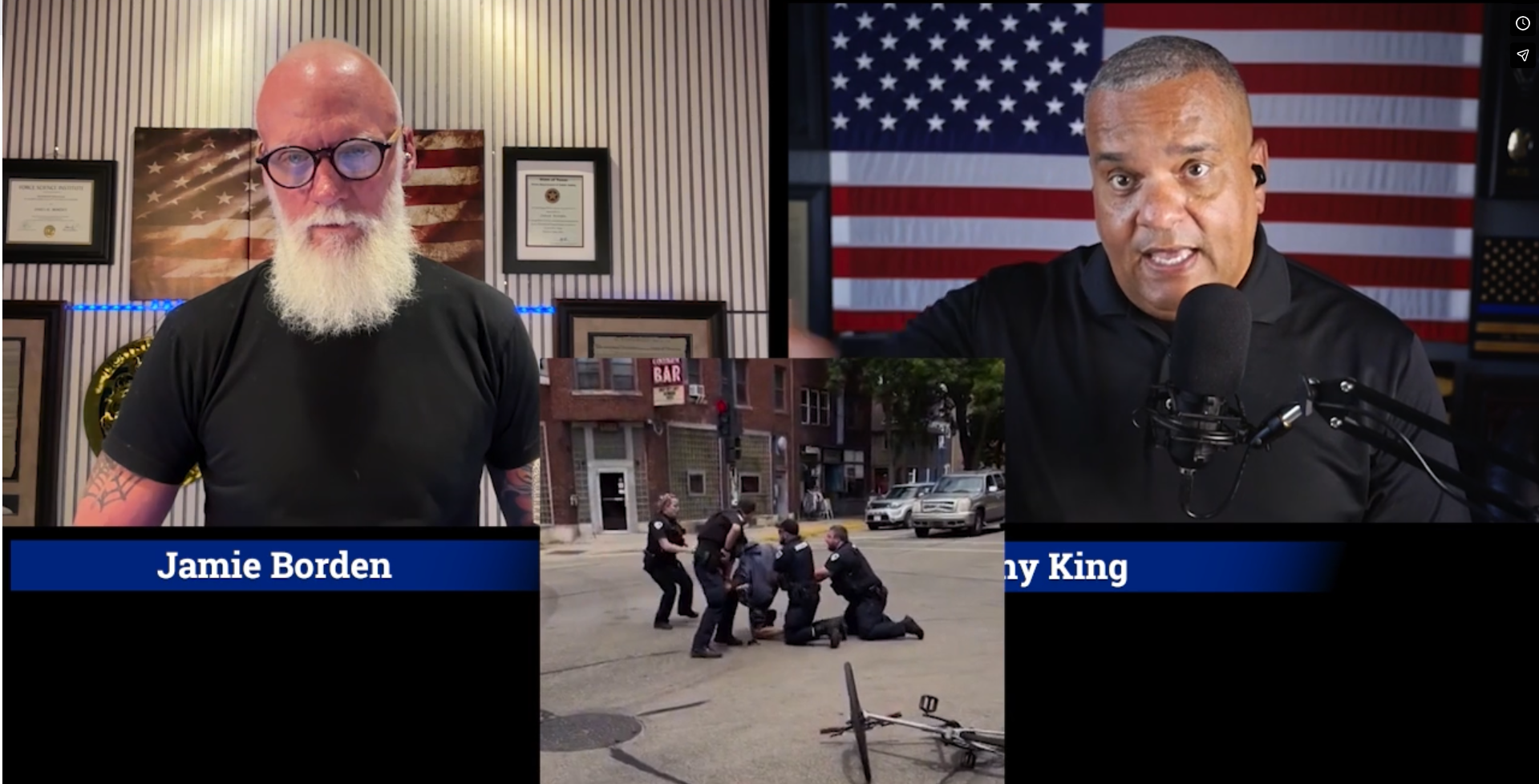
https://vimeo.com/manage/videos/1219390635 Why Police Use-of-Force Videos Mislead the Public: Two Use-of-Force Experts on the Madison Shooting of Corey Ruiz Jamie Borden